
Ophthalmologist Dr Natasha Lim explains how SILK, ICL and other procedures work – and how doctors determine which is right for each patient Waking up to clear vision without reaching for glasses or contacts is one of the most commonly cited motivations for seeking vision correction surgery. Those with myopia who jog and swim regularly …

Ophthalmologist Dr Natasha Lim explains how SILK, ICL and other procedures work – and how doctors determine which is right for each patient

Waking up to clear vision without reaching for glasses or contacts is one of the most commonly cited motivations for seeking vision correction surgery.
Those with myopia who jog and swim regularly will empathise with the issues Ms Stella Lin, 40, faced before she had her vision corrected with surgery.
She says: “As a contact lens wearer, I would find it very troublesome to put them on at 6.30am before my morning run, when I’m already very tired. And when I swim, the lenses will sometimes shift to the corner of the eye and irritate me.”
The manager at an aesthetic medical clinic has been living with myopia since the age of 12, when her prescription was initially 200. This steadily progressed to 800 by adulthood.

According to the Singapore National Eye Centre, Singapore has one of the highest rates of myopia (short-sightedness) in the world, with the condition affecting over 80 per cent of adult Singaporeans. Twenty per cent of children here are myopic by seven years old.
Through a friend’s recommendation, Ms Lin visited Dr Natasha Lim Eye Centre last March for a consultation.
She says: “Dr Lim shared with me in detail the pros and cons of different corrective eye surgery options such as Lasik, photorefractive keratectomy (PRK), smooth incision lenticular keratomileusis (SILK) and implantable contact lens (ICL); and advised which would suit my eyes best.”
Ms Lin’s selected procedure was SILK, a flapless, minimally invasive approach introduced in 2024. It was chosen because she had existing dry eyes, and SILK is said to be less likely to cause post-operative dry eyes compared to other laser options.
How the SILK procedure works
SILK is an advanced lenticule extraction laser procedure, similar to its 2009 predecessor, SMILE (Small Incision Lenticular Extraction).
Both are lenticule laser procedures, where a tiny disc-shaped piece of tissue (a lenticule) – resembling a coin – is sculpted by a femtosecond laser and then removed to reshape the cornea. This helps to correct myopia and astigmatism.
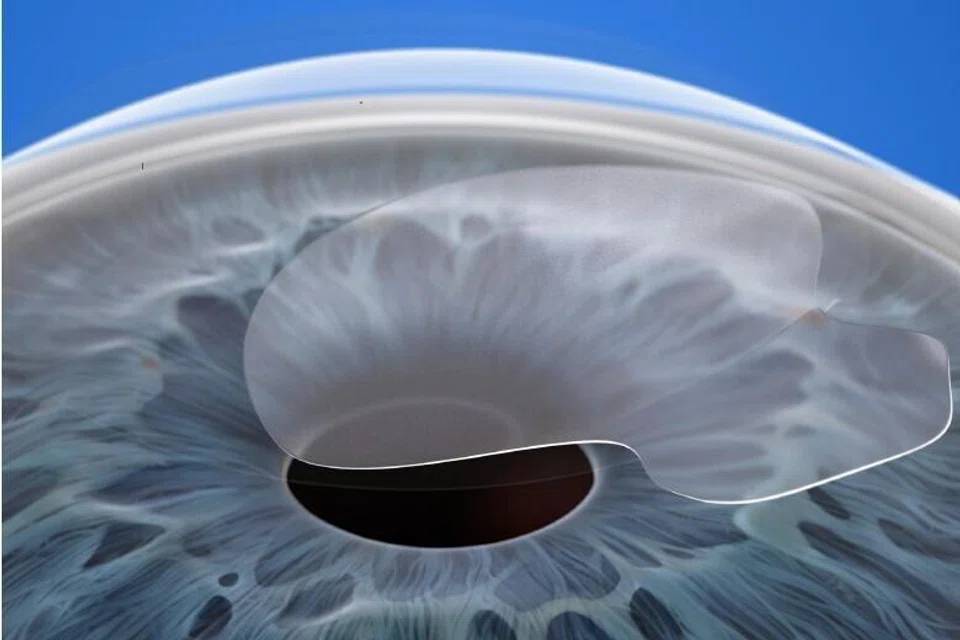
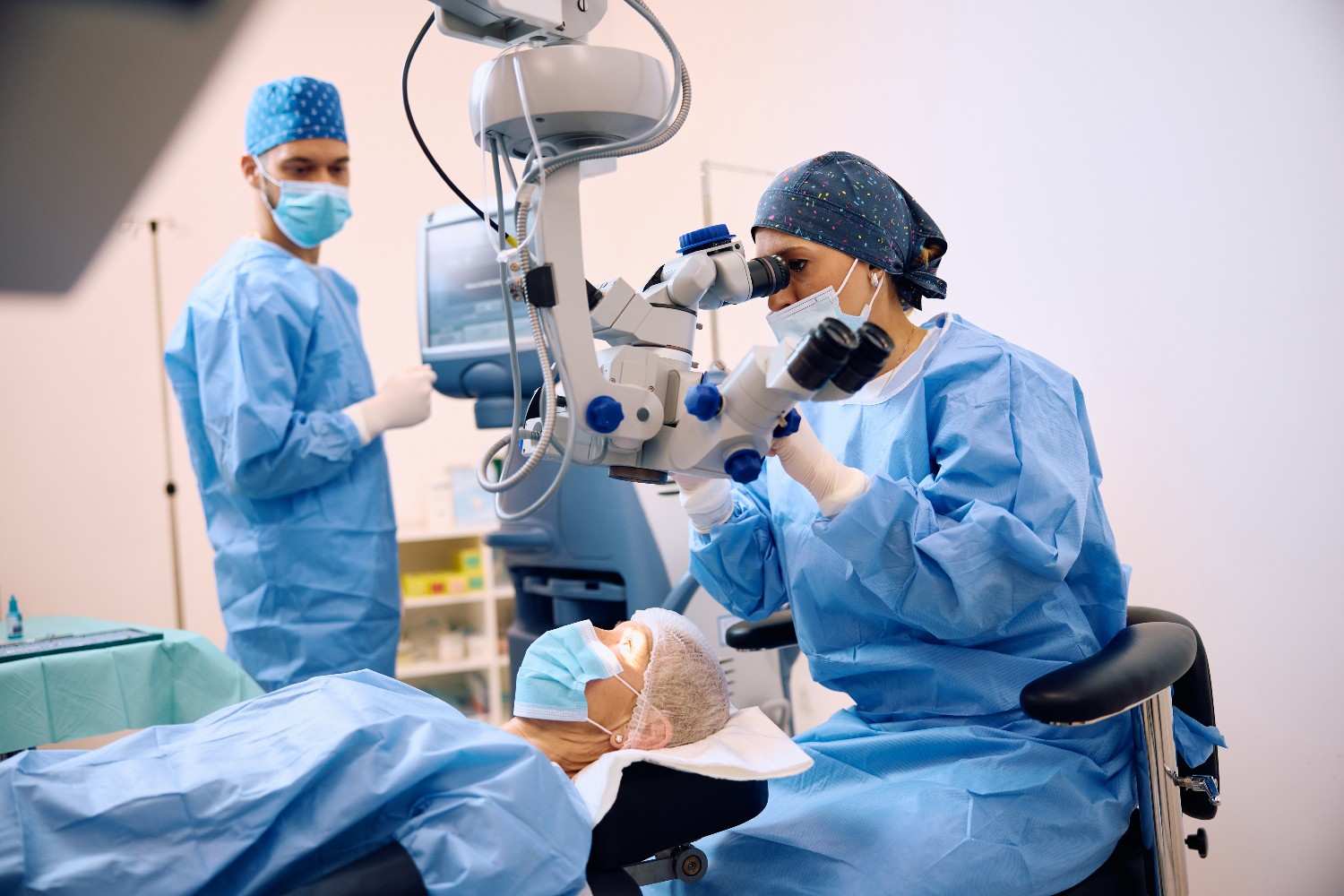
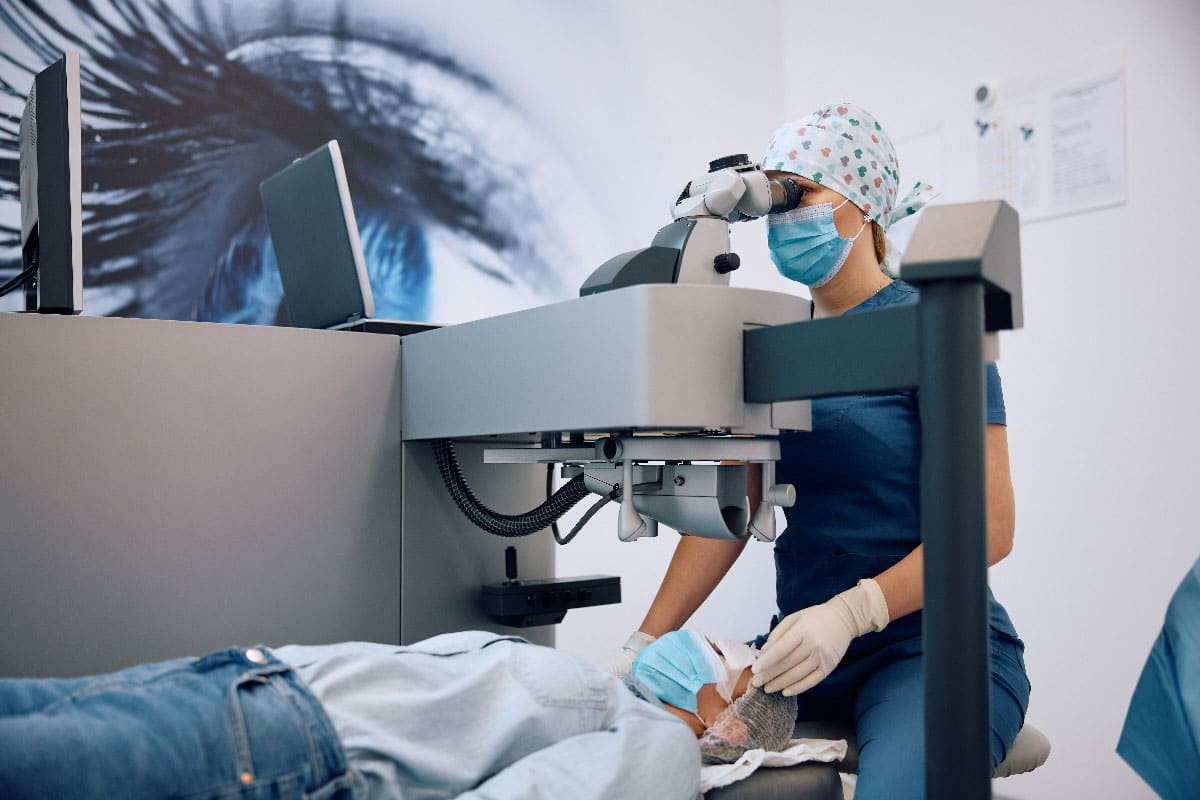
The SILK procedure uses a laser to sculpt and remove a small piece of tissue beneath the corneal surface.
Explains Dr Natasha Lim, medical director and ophthalmologist, and senior consultant at Dr Natasha Lim Eye Centre: “During the SILK procedure, a small corneal incision – about 2mm wide – is created with a femtosecond laser, which is an ultra-fast laser.
“The same laser then sculpts a precisely calculated lenticule, customised to a person’s eye, just beneath the surface, which is removed through that small opening.”
The laser creation takes about 16 seconds, and the lenticule dissection and removal typically take a few minutes under topical anaesthesia applied with numbing drops, she notes.
SILK uses a low-energy, submicron precision laser system, which makes creating and removing the lenticule easier and faster, says Dr Lim. Patients also tend to have less post-operative inflammation and are more likely to have faster vision recovery, she adds.
This was Ms Lin’s experience as well. Post-surgery, she was prescribed eyedrops and went home with protective eye shields.
Although her eyes were initially watery and her vision slightly blurry immediately afterwards, she could see well enough to return to work the next day. The operation did not exacerbate her existing dry eye issue.
“As with any eye procedure, potential risks include dryness, glare or seeing halos in low light, or over- or under-correction of refractive power which may occasionally require enhancement,” says Dr Lim.
Full recovery typically takes about four weeks. Ms Lin returned to her active lifestyle after a month.
While SILK worked well for Ms Lin, eligibility for eye refractive surgery depends on the individual, notes Dr Lim.
Other vision correction options
Ms Lin recalls bringing a friend to Dr Natasha Lim Eye Centre but the surgery did not proceed as her friend’s cornea was too thin.
Explains Dr Lim: “SILK is suitable for adults aged 18 and above whose vision has been stable for at least a year, and who have healthy corneas and eyes.
“They need to have realistic expectations as well – SILK can treat up to −12.00 D (1,200 degrees) of myopia and up to −6.00 D (600 degrees) of astigmatism, assessed on a case-by-case basis.”
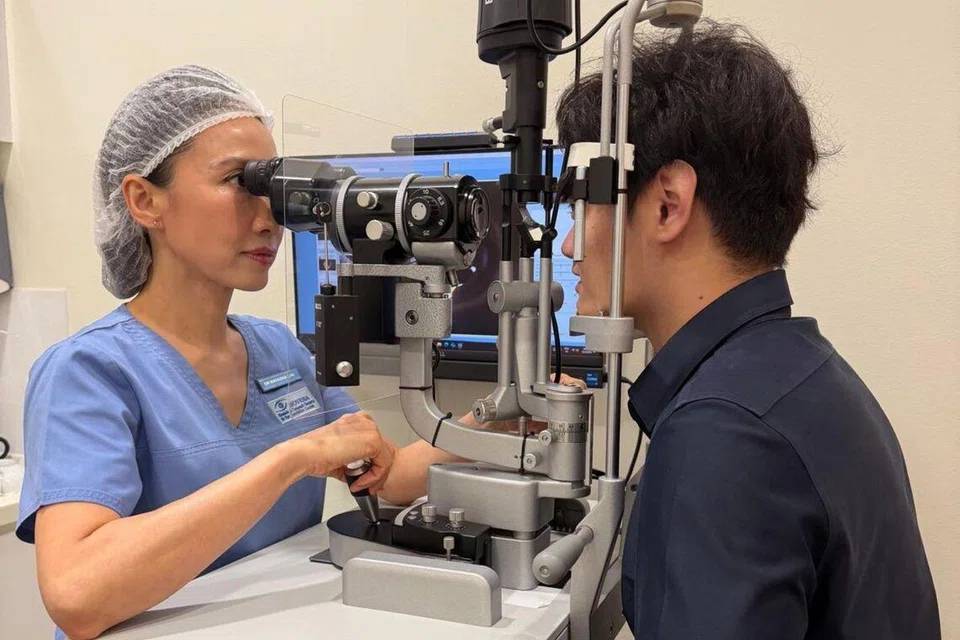
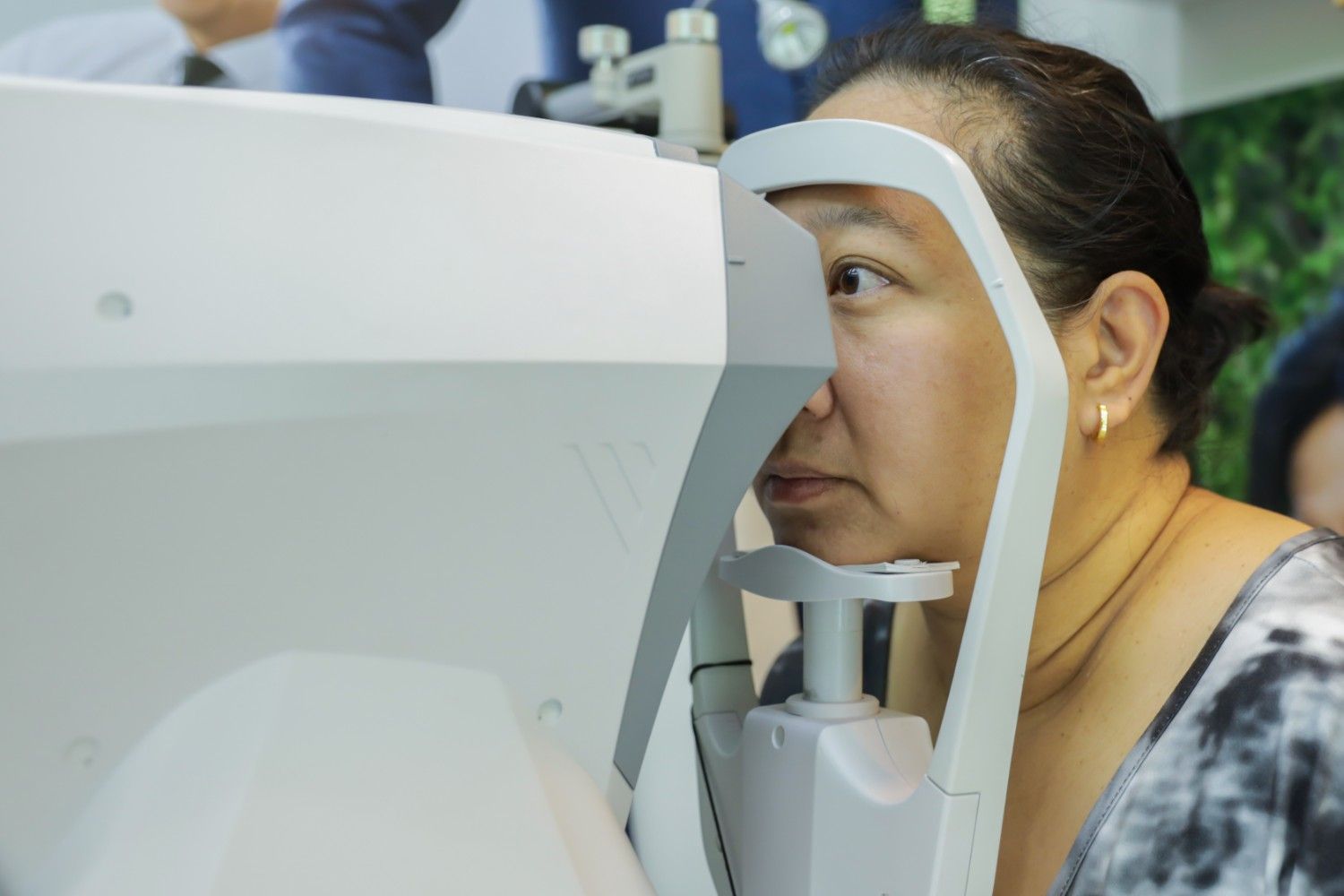
Dr Natasha Lim conducts a pre-surgery eye assessment.
The options, as shared by Dr Lim, include Lasik, in which a thin corneal flap is created and lifted, an excimer laser reshapes the tissue underneath, and the flap is replaced.
For patients whose corneas are not suited to a flap-based approach, surface procedures such as PRK or LASEK (laser-assisted sub-epithelial keratectomy) are an alternative: The epithelium (the surface layer) is removed before an excimer laser reshapes the cornea, and a bandage contact lens protects the eye while the surface heals.
For patients who are not candidates for laser procedures at all – such as those with very thin corneas or very high prescriptions – an ICL, or Implantable Collamer Lens, may be an option. This involves placing a lens inside the eye rather than reshaping the cornea.
Dr Lim shares that both male and female patients aged between 18 and 50 years go to her clinic for refractive surgery.
“They would tell me that wearing glasses interferes with their job scope, especially for those working as cabin crew; or those who do sports like swimming.
“Others say that wearing contact lenses for more than four hours causes irritation, a “foreign body” sensation, grittiness and dry eye symptoms,” she says.
“No single procedure is right for everyone. Your prescription, corneal measurements, overall eye health and lifestyle goals are the deciding factors.”
Find out more about the SILK procedure at Dr Natasha Lim Eye Centre.